Introduction
When Rajesh Kumar's textile export business in Tirupur was struggling with high shipping costs and delayed deliveries, he discovered the game-changing world of professional sea freight forwarding. Like thousands of Indian businesses, Rajesh learned that choosing the right freight forwarding partner can make or break your international trade success.
Sea freight forwarding remains the lifeline of India's $670 billion international trade economy. Whether you're shipping cotton from Gujarat ports or importing machinery through Chennai, understanding this process can save your business both time and money while ensuring your cargo reaches its destination safely.
Understanding Sea Freight Forwarding in the Indian Context
Sea freight forwarding is essentially your business's bridge to global markets. Think of a freight forwarder as your shipping consultant, logistics coordinator, and documentation expert all rolled into one. They handle everything from booking space on vessels to navigating the complex web of Indian customs regulations.
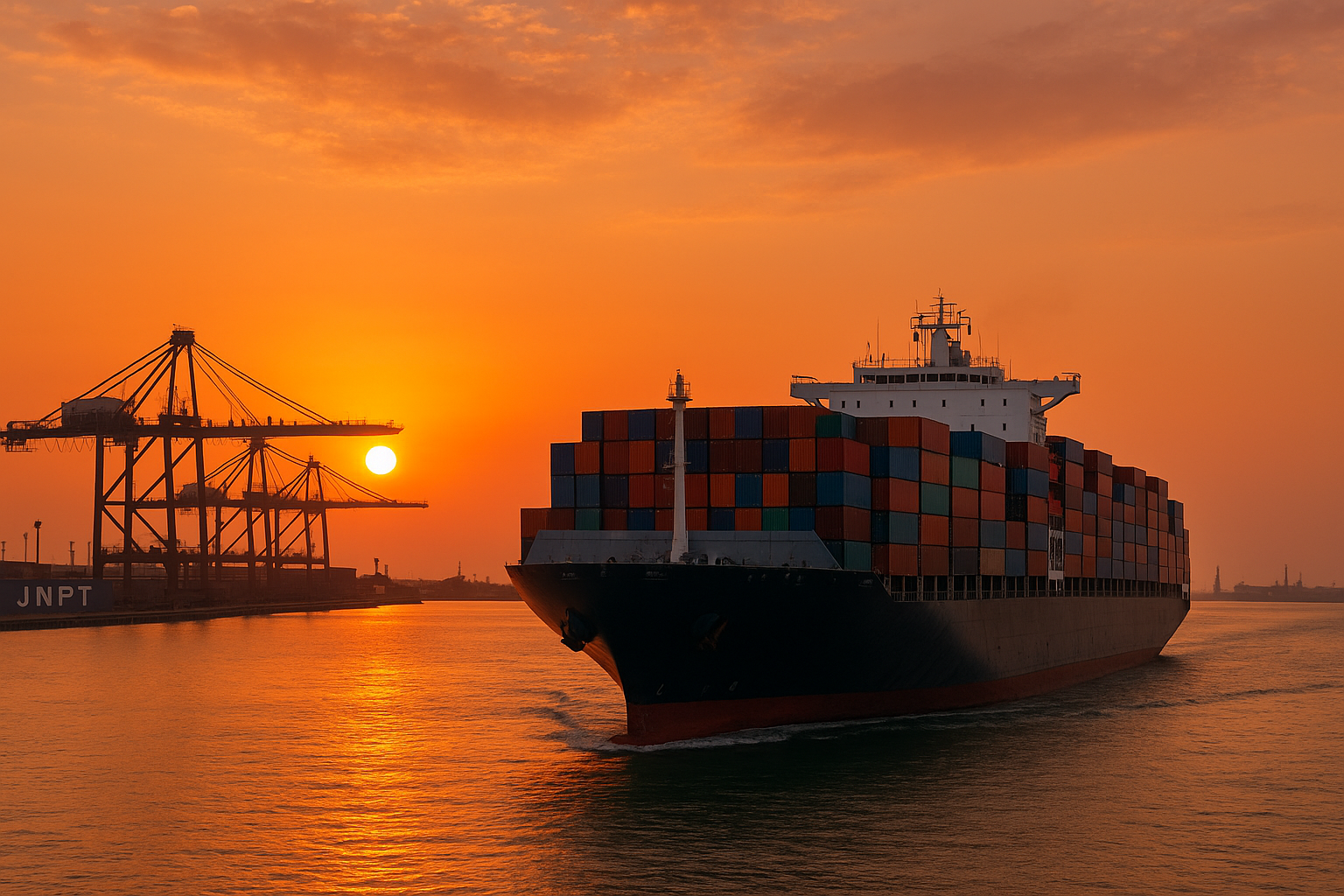
In India's context, this becomes even more crucial given our extensive coastline spanning 7,516 kilometers with 13 major ports including Mumbai (JNPT), Chennai, Kolkata, and Cochin. Each port has its unique procedures, advantages, and specializations that experienced forwarders understand intimately.
The Step-by-Step Sea Freight Process: What Actually Happens
Step 1: Initial Consultation and Quote
Your forwarder first assesses your cargo type, volume, destination, and timeline requirements. They'll provide quotes from multiple shipping lines, helping you choose between options like Maersk, MSC, or COSCO based on your specific needs.
Step 2: Cargo Space Booking and Container Selection
Based on your shipment size, they'll book appropriate container space - whether it's a 20-foot container for smaller shipments or 40-foot containers for larger volumes. Container costs from Indian ports typically include origin charges ranging $300-1,000 per container, covering various handling and administrative fees.
Step 3: Documentation Preparation
This is where professional expertise truly shines. Your forwarder prepares critical documents including:
- Commercial Invoice with accurate goods description and values
- Packing List detailing each item's specifications
- Bill of Lading (your cargo's legal ownership document)
- Export License from DGFT if required for restricted goods
- Certificate of Origin for preferential trade agreements
Step 4: Cargo Collection and Consolidation
Professional forwarders coordinate pickup from your facility, often consolidating smaller shipments with other exporters to reduce costs. This LCL (Less than Container Load) option helps smaller businesses access international markets affordably.
Step 5: Port Operations and Customs Clearance
At the port, your cargo undergoes customs examination and clearance. Through ICEGATE, India's electronic customs gateway, all documentation is filed electronically, significantly speeding up the process compared to manual systems.
Step 6: Vessel Loading and Transit Tracking
Once cleared, containers are loaded onto vessels. Modern forwarders provide real-time tracking, so you know exactly where your cargo is during its ocean journey.


Why Sea Freight Makes Financial Sense for Indian Businesses
Consider this real example: Shipping a 20-foot container of handicrafts from Mumbai to New York costs approximately $2,000-3,500 by sea versus $15,000-25,000 by air. That's potential savings of 80% or more on transportation costs alone.
For bulk commodities like rice, spices, or textiles that form the backbone of Indian exports, sea freight's cost efficiency becomes even more pronounced. A rice exporter from Haryana can ship 25 tons in one container for roughly the same cost as shipping just 2-3 tons by air.
Environmental Benefits: The Green Choice
Indian businesses increasingly recognize sea freight's environmental advantages. Ocean shipping produces approximately 90% less CO2 per ton-kilometer compared to air freight. For environmentally conscious brands, this becomes a significant selling point with international customers.
Common Challenges and How to Overcome Them
Challenge 1: Documentation Errors
Solution: Work with experienced forwarders who understand Indian export procedures and destination country requirements. They maintain updated knowledge of changing regulations across different trade routes.
Challenge 2: Port Congestion and Delays
Solution: Professional forwarders monitor port conditions and can reroute shipments through alternative ports like Mundra or Visakhapatnam when major ports face congestion.
Challenge 3: Hidden Costs
Solution: Request detailed quotations including all charges like terminal handling, documentation fees, and destination charges to avoid surprises.
Choosing the Right Sea Freight Partner for Your Business
Look for forwarders with:
- Valid FIATA (International Federation of Freight Forwarders Associations) membership
- Strong relationships with multiple shipping lines
- Technology platforms for shipment tracking and documentation
- Experience in your specific industry and trade routes
- Local presence at your preferred Indian ports
Cost Optimization Strategies for Indian Exporters
- Consolidation Services: Share container space with other exporters for smaller shipments
- Seasonal Planning: Book space during off-peak seasons for better rates
- Multi-Modal Solutions: Combine sea freight with efficient inland transportation
- Documentation Efficiency: Proper paperwork prevents costly delays and penalties
Technology Integration: The Digital Advantage
Modern freight forwarders leverage technology platforms that integrate with Indian systems like ICEGATE and global tracking systems. This digital integration provides:
- Real-time shipment visibility
- Automated documentation processing
- Predictive analytics for delivery times
- Mobile access to shipping information
Frequently Asked Questions
Q: What's the average transit time for sea freight from India to major destinations?
A: Transit times vary by destination - typically 15-20 days to Middle East, 25-30 days to Europe, and 30-40 days to North America from Indian ports.
Q: How do I calculate sea freight costs from India?
A: Costs depend on cargo volume, weight, destination, and shipping line. Professional forwarders provide detailed quotes including ocean freight, origin charges, destination charges, and documentation fees.
Q: Can small businesses use sea freight forwarding services?
A: Absolutely! LCL (Less than Container Load) services allow small exporters to share container space, making sea freight accessible and cost-effective for smaller shipments.
Q: What insurance options are available for sea freight from India?
A: Marine cargo insurance covers risks like damage, theft, or loss during transit. Your forwarder can arrange appropriate coverage based on your cargo value and risk tolerance.


