When BHEL (Bharat Heavy Electricals Limited) needed to transport a 250-ton power plant turbine from their Bhopal facility to a port for export to Bangladesh, it wasn't a job for regular freight services. This massive piece of equipment required specialized project cargo handling — careful planning, custom equipment, route surveys, and expert coordination at every step.
Project cargo handling represents one of the most challenging aspects of logistics, requiring technical expertise, specialized equipment, and meticulous planning. In India's growing infrastructure and industrial sectors, demand for such services continues expanding as businesses move increasingly complex and valuable equipment.
Understanding Project Cargo: Beyond Conventional Shipping
Project cargo differs fundamentally from conventional freight. It typically includes:
- Equipment exceeding standard container dimensions
- Items weighing over 50 tons requiring specialized lifting
- High-value machinery needing extra security and handling care
- Time-sensitive deliveries for project completion deadlines
- Multiple components requiring synchronized delivery
Common Project Cargo Types in India:
Power Generation Equipment
Turbines, generators, transformers, and boilers for thermal, nuclear, and renewable energy projects. India's growing energy sector generates significant demand for such movements.
Oil and Gas Infrastructure
Drilling equipment, pipelines, refinement machinery, and petrochemical plant components. With India's push toward energy security, these movements are increasingly common.
Construction and Mining Equipment
Heavy earthmoving equipment, cranes, mining trucks, and processing plants. Infrastructure development projects across India require such specialized transportation.
Industrial Machinery
Manufacturing equipment, steel plant components, cement plant machinery, and chemical processing equipment supporting India's industrial growth.
The Complexity of Project Cargo Planning
Route Survey and Planning: Critical First Step
Before moving any oversized cargo, comprehensive route surveys identify potential obstacles:
- Bridge height and weight restrictions
- Road width limitations and turning radii
- Power line clearances and utility relocations
- Traffic congestion patterns and timing windows
- State border crossing procedures and permits
Consider a recent case where a 180-ton reactor vessel needed transport from Kandla port to a chemical plant in Gujarat. The route survey revealed three bridges requiring temporary modifications and power lines needing lifting — coordination that took weeks but prevented costly delays during actual transport.
Permit Acquisition: Navigating Regulatory Framework
Project cargo movements require multiple permits from various authorities:
- State Transport Department: Oversize/overweight permits
- Highway Authorities: Route approval for national highways
- Local Municipal Authorities: City passage permits
- Police Departments: Escort and traffic management approvals
- Utility Companies: Power line lifting or telecommunication cable protection
Professional project cargo handlers maintain relationships with these authorities and understand application processes, significantly reducing permit acquisition time.
Equipment Selection and Availability
Project cargo requires specialized transportation equipment rarely found in conventional fleets:
Heavy Lift Cranes
Mobile cranes ranging from 200-ton to 1000-ton capacity for loading and unloading operations. Indian ports like JNPT and Chennai have invested in specialized heavy lift cranes to handle increasing project cargo volumes.
Specialized Trailers
- Multi-Axle Trailers: Distribute weight across multiple axles for road safety
- Modular Trailers: Configurable systems for unique cargo shapes
- Self-Propelled Modular Transporters (SPMT): Computer-controlled vehicles for precise positioning
- Hydraulic Trailers: Adjustable height and tilt capabilities
Rigging and Lifting Equipment
Specialized slings, shackles, spreader beams, and lifting frames designed for specific cargo shapes and weights.
Port Operations: Where Precision Meets Power
Specialized Port Facilities
Not all Indian ports can handle project cargo effectively. Leading project cargo ports include:
- JNPT (Mumbai): India's largest container port has dedicated project cargo berths with heavy lift cranes and specialized handling areas.
- Chennai Port: Strong infrastructure for project cargo with heavy lift capabilities and good connectivity to industrial corridors.
- Kandla Port: Strategic location for serving western and northern India's industrial regions with specialized heavy cargo handling facilities.
- Visakhapatnam Port: Natural deep water harbor with excellent heavy lift capabilities serving eastern and central India's industrial needs.
Risk Management in Project Cargo Operations
Insurance Considerations
Project cargo insurance differs significantly from conventional marine insurance:
- Total Loss Coverage: Given high individual values, total loss scenarios require substantial coverage
- Partial Damage Assessment: Complex machinery may suffer internal damage not visible externally
- Delay Coverage: Project schedules often include penalty clauses making delay insurance crucial
- Loading/Unloading Coverage: Many accidents occur during terminal operations rather than transit
Technical Risk Assessment
Professional project cargo handlers conduct detailed risk assessments covering:
- Structural integrity during transport
- Environmental protection from weather
- Security considerations for high-value cargo
- Emergency response procedures
- Alternative routing options
Case Study: Wind Turbine Transportation
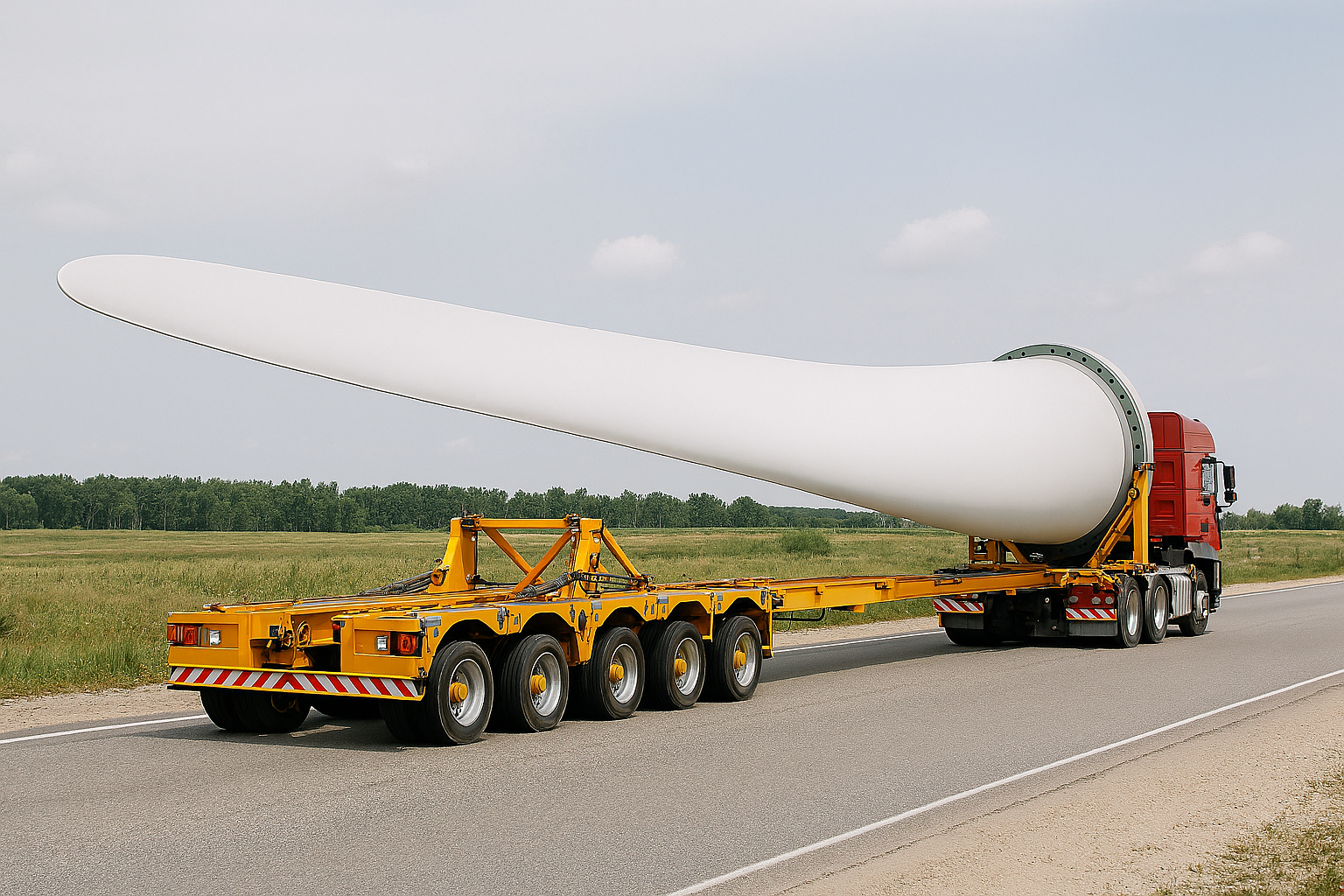

Recent growth in India's renewable energy sector has increased wind turbine transportation demand. These components present unique challenges:
- Wind Turbine Blades: Up to 70 meters long requiring specialized extendable trailers and careful route selection to navigate turns.
- Turbine Nacelles: Weighing 100+ tons with complex shapes requiring custom lifting equipment and secure mounting systems.
- Tower Sections: Multiple cylindrical sections requiring careful handling to prevent deformation during transport.
A recent project moving 50 wind turbines from Kandla port to a wind farm in Rajasthan required:
- 150+ permit applications across multiple states
- Specialized blade trailers with hydraulic steering
- Route modifications including temporary traffic light removal
- Coordinated convoy movement over 10 days
- 24/7 security escort for high-value components
Technology Integration in Project Cargo
Real-Time Monitoring Systems
Modern project cargo transportation employs sophisticated monitoring:
- GPS Tracking: Precise location monitoring with geo-fencing capabilities
- Tilt Sensors: Monitoring cargo angle to prevent damage
- Weight Distribution Monitoring: Ensuring proper load distribution across trailer axles
- Environmental Sensors: Temperature and humidity monitoring for sensitive equipment
3D Planning and Simulation
Advanced project cargo handlers use 3D modeling software to:
- Visualize cargo positioning and securing methods
- Simulate loading and unloading procedures
- Plan optimal trailer configurations
- Test route feasibility virtually before actual movement
Cost Factors in Project Cargo Handling
Transportation Costs
- Specialized equipment rental rates (often ₹50,000–500,000 per day)
- Fuel consumption for heavy haul vehicles
- Escort vehicle requirements
- Route modification costs
Port and Terminal Charges
- Heavy lift crane usage fees (₹100,000–1,000,000 per lift depending on capacity)
- Extended port storage for coordination activities
- Special berth allocation charges for project cargo vessels
- Stevedoring charges for specialized handling crews
Permit and Administrative Costs
- State transport permits (₹10,000–100,000 depending on cargo size)
- Highway authority clearances
- Police escort charges
- Utility relocation costs when required
Insurance Premiums
Typically 0.5–2% of cargo value, significantly higher than conventional freight due to specialized risks and handling requirements.
Coordination Challenges and Solutions
Multi-Stakeholder Management
Project cargo movements involve numerous parties requiring precise coordination:
- Cargo Owners: Often have strict project timelines and quality requirements
- Equipment Suppliers: Crane operators, trailer providers, rigging specialists
- Port Authorities: Terminal operators, customs, port security
- Government Agencies: Transport departments, police, utility companies
- Insurance Companies: Risk assessors and claims handlers
Timeline Synchronization
Unlike conventional freight with flexible schedules, project cargo often operates under rigid project timelines. A power plant construction project might have penalty clauses for late equipment delivery, making precise scheduling crucial.
Communication Systems
Professional project cargo handlers maintain 24/7 communication centers coordinating all movement aspects. Real-time updates ensure all stakeholders remain informed about progress, delays, or issues requiring immediate attention.
Emerging Trends in Indian Project Cargo
Infrastructure Development Boom
India's infrastructure push under various government initiatives creates growing demand for project cargo services:
- Smart Cities Mission: Urban infrastructure equipment movement
- Industrial Corridors: Manufacturing equipment for new industrial zones
- Port Development: Construction equipment for port expansion projects
- Renewable Energy: Solar panel manufacturing equipment and wind turbine components
Make in India Impact
As more manufacturing moves to India, there's increased demand for:
- Production line equipment imports for new factories
- Technology transfer equipment movements
- Heavy machinery for automotive and electronics manufacturing
- Pharmaceutical and chemical plant equipment
Digital Transformation
Project cargo handling increasingly adopts digital technologies:
- Drone Surveys: Route reconnaissance and progress monitoring
- IoT Integration: Real-time cargo condition monitoring
- AI-Powered Planning: Optimal route and equipment selection
- Digital Documentation: Streamlined permit applications and approvals
Sustainability in Project Cargo
Environmental Considerations
Modern project cargo handling emphasizes environmental responsibility:
- Fuel Efficiency: Route optimization reduces fuel consumption and emissions
- Load Optimization: Proper weight distribution minimizes road damage
- Reusable Equipment: Modular systems reduce manufacturing waste
- Carbon Footprint Tracking: Measuring and reporting environmental impact
Community Impact Management
Large cargo movements affect local communities. Professional handlers engage with:
- Local authorities for traffic management
- Community leaders to minimize disruption
- Business associations to coordinate timing
- Emergency services for contingency planning
Specialized Services and Value-Added Offerings
Engineering and Technical Support
Leading project cargo providers offer technical expertise including:
- Structural Analysis: Ensuring cargo integrity during transport
- Custom Fixture Design: Specialized securing and protection systems
- Load Calculations: Weight distribution and trailer selection
- Technical Documentation: Engineering drawings and certificates
Project Management Services
Comprehensive project cargo handling includes:
- Master Planning: Overall logistics strategy and timeline development
- Risk Assessment: Identifying and mitigating potential issues
- Vendor Coordination: Managing multiple service providers
- Progress Reporting: Regular updates to stakeholders
Emergency Response Capabilities
Project cargo handlers maintain emergency response capabilities including:
- Breakdown Recovery: Specialized recovery equipment for heavy loads
- Alternative Routing: Backup plans for unexpected obstacles
- Technical Support: 24/7 engineering assistance
- Crisis Communication: Coordinated response to serious incidents
Selecting the Right Project Cargo Partner
Technical Expertise Assessment
Evaluate potential partners based on:
- Engineering Capabilities: In-house technical expertise and certifications
- Equipment Availability: Access to required specialized equipment
- Experience Portfolio: Successful completion of similar projects
- Safety Record: Incident-free performance history
- Financial Stability: Ability to handle large, complex projects
Operational Excellence Indicators
Look for providers demonstrating:
- Project Management Maturity: Structured approaches to complex logistics
- Technology Integration: Modern systems for planning and monitoring
- Regulatory Knowledge: Understanding of current permit requirements
- Stakeholder Relationships: Established connections with authorities and service providers
Regulatory Compliance and Documentation
Export-Import Procedures
Project cargo often involves international movements requiring specialized documentation:
- Project Import/Export Licenses: Special permits for capital goods
- Temporary Import Procedures: For equipment requiring return after use
- Customs Valuation: Complex pricing structures for project components
- Foreign Exchange Compliance: FEMA regulations for high-value transactions
Safety and Quality Certifications
Professional project cargo handlers maintain various certifications:
- ISO 9001: Quality management systems
- OHSAS 18001: Occupational health and safety standards
- ISO 14001: Environmental management systems
- FIATA: International freight forwarding associations membership
Future Outlook for Project Cargo in India
Market Growth Projections
Industry analysts project significant growth in India's project cargo market driven by:
- Infrastructure development investments exceeding $1.4 trillion by 2025
- Manufacturing sector expansion under various government schemes
- Renewable energy capacity additions requiring specialized equipment
- Urban development projects in tier-2 and tier-3 cities
Technology Evolution
Emerging technologies will reshape project cargo handling:
- Autonomous Vehicles: Self-driving heavy haul trucks for safer transport
- Advanced Materials: Lighter, stronger rigging and transport equipment
- Predictive Analytics: AI-powered route optimization and risk assessment
- Blockchain Integration: Secure, transparent documentation and tracking
Frequently Asked Questions
Q: What qualifies as project cargo in shipping terms?
A: Project cargo typically refers to oversized, overweight, high-value, or complex shipments that cannot be transported using standard containers or conventional methods. This includes machinery exceeding 40 feet in length, items weighing over 50 tons, or equipment requiring specialized handling due to its shape, value, or sensitivity.
Q: How much does project cargo handling cost in India?
A: Costs vary significantly based on cargo dimensions, weight, distance, and complexity. Typical costs range from ₹50–500 per ton-kilometer for domestic transport, plus specialized equipment charges, permits, and port handling fees. International project cargo movements can cost $5,000–50,000+ depending on cargo specifications and destination.
Q: Which Indian ports are best equipped for project cargo handling?
A: JNPT (Mumbai), Chennai, Kandla, and Visakhapatnam are India's primary project cargo ports with heavy lift capabilities, specialized berths, and experienced handling teams. The choice depends on your cargo's origin/destination, size requirements, and shipping line preferences.
Q: How long does project cargo transportation take in India?
A: Timeline depends on cargo complexity, route distance, and permit requirements. Simple domestic movements may take 5–10 days, while complex international projects requiring route modifications and multiple permits can take several weeks. Planning typically begins 2–3 months before actual movement.
Q: What insurance coverage is recommended for project cargo?
A: Comprehensive marine cargo insurance covering total loss, partial damage, and delay is essential. Given high values involved, consider "all risks" coverage including loading/unloading operations. Professional project cargo handlers can arrange appropriate coverage through specialized underwriters familiar with heavy lift risks.


